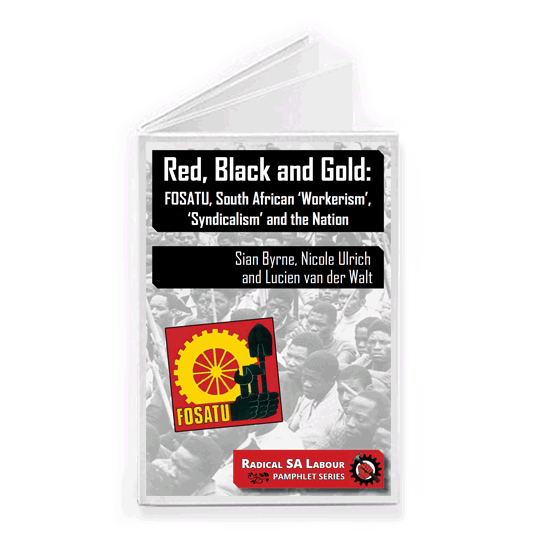
Red, Black and Gold: FOSATU, South African ‘Workerism’, ‘Syndicalism’ and the Nation

Authors: Sian Byrne, Nicole Ulrich and Lucien van der Walt

PDF file size: 283 KB

Download PDF

The Federation of South African Trade Unions (FOSATU) inaugurated in 1979, the strongest working class organisation opposing apartheid in the early 1980s. FOSATU was associated with the distinct radical politics of South African ‘workerism.’ ‘Workerism’ has been widely caricatured: this pamphlet provides a recovery of its politics and history. Its emphasis on strong, industrial, autonomous unions, free of party control, its project of building a working class movement and identity, its participation in a wide range of struggles, and its left-wing, anti-capitalist and class-based (and anti-nationalist) approach to the national question is outlined.

Continue reading

[Leaflet] The 1973 Strikes and the birth of a New Movement in Natal

[Leaflet] The 1973 Strikes and the birth of a New Movement in Natal by Nicole Ulrich

Author: Nicole Ulrich

PDF File Size: 166 KB

Download PDF

Nicole Ulrich reflects on the birth of the modern non-racial trade union movement in the early 1970s in South Africa, and draws lessons for the social movements of today.

From: Khanya: A Journal for Activists, No. 8, May 2005

Continue reading

Prefiguring Democratic Revolution?: ‘Workers’ Control’ and ‘Workerist’ Traditions of Radical South African Labour, 1970–1985

Prefiguring Democratic Revolution?: ‘Workers’ Control’ and ‘Workerist’ Traditions of Radical South African Labour, 1970–1985 by Sian Byrne and Nicole Ulrich Author: Sian Byrne and Nicole Ulrich

PDF File Size: 783 KB

Download PDF

During the 1970s and early 1980s, sections of the trade union movement questioned the African National Congress (ANC) and South African Communist Party’s (SACP’s) narrow vision of freedom, which was based on the capture of the colonial state by a nationalist elite. Located within a distinct political current that prioritised participatory/direct-democracy and egalitarianism workers were regarded as the locus of transformative power in society, and their organisations were viewed as prefiguring a radically democratic future. This article examines the very different kind of radical anti-colonial engagement offered by ‘workers’ control’ in the 1970s and ‘workerism’ in the early 1980s that was developed by the Trade Union Advisory Co-ordinating Council (TUACC) and the Federation of South African Trade Unions (FOSATU), respectively. Keen to draw lessons for the trade union movement today, this article outlines the key characteristics and limits of these traditions that facilitated their decline in the post-apartheid context.

Sian Byrne & Nicole Ulrich, Prefiguring Democratic Revolution? ‘Workers’ Control’ and ‘Workerist’ Traditions of Radical South African Labour, 1970–1985, first published in the Journal of Contemporary African Studies, 2016

Continue reading